On 19 May 2026, KrASIA reported that FusionAP, a Malaysia-based semiconductor packaging company, had closed USD 2 million in pre-seed funding. The round was co-led by Vertex Ventures Southeast Asia and India alongside Southern Capital Group. The headline number is modest. The structural significance is large enough that Malaysian operators in adjacent sectors should be reading this carefully.
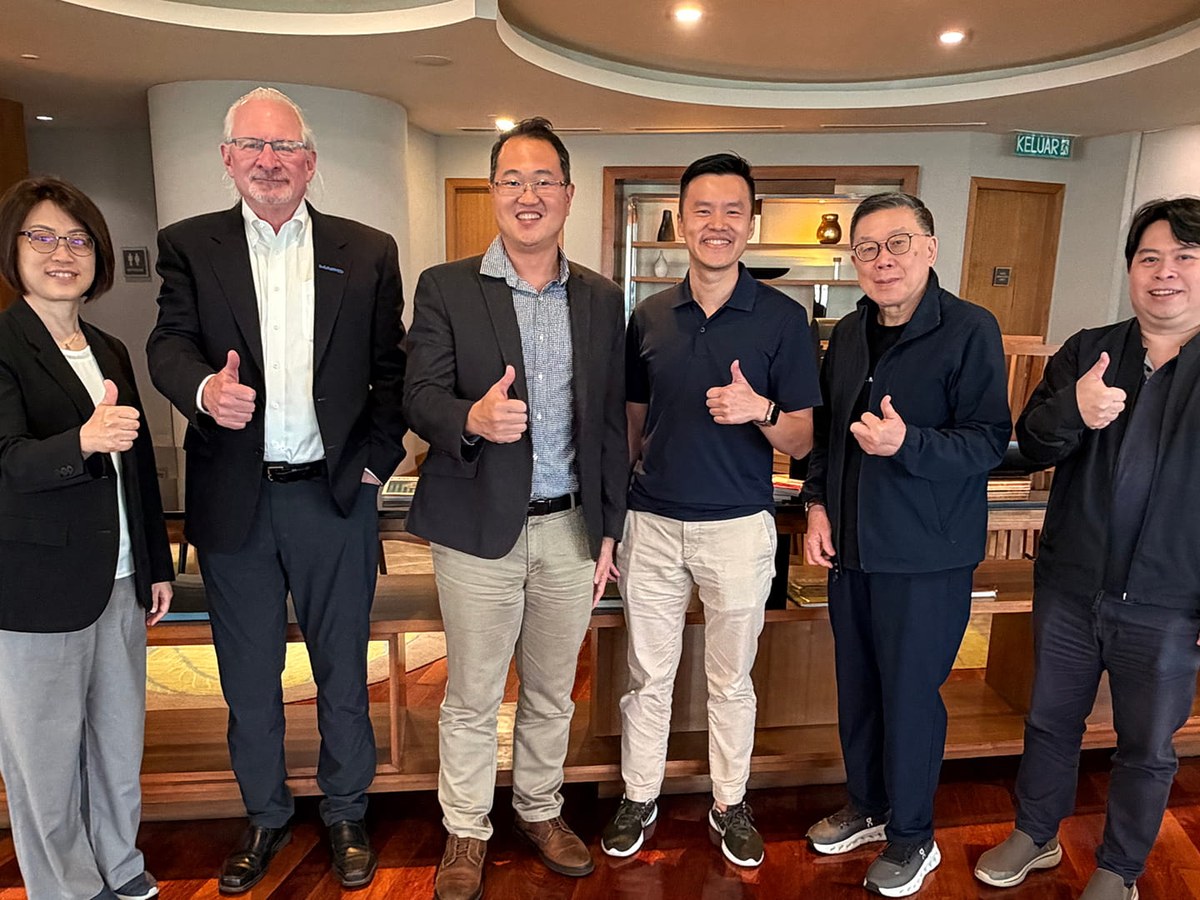
FusionAP is being built by former Intel and TSMC executives. The CEO is Ooi Teng Chow, who previously helped build Intel's advanced packaging operations in Malaysia. The co-founder is Peter Chavart, former general manager of disaggregation manufacturing operations at Intel. Two people who spent careers inside the most consequential semiconductor manufacturing operations in the world have now decided that the right place to build the next generation of advanced packaging infrastructure is here, in Malaysia, as a standalone outsourced platform.
The technical category matters. FusionAP is targeting OSAT, outsourced semiconductor assembly and test, focused specifically on 2.5D and 3D advanced packaging. This is not commodity wirebonding. This is the layer of the semiconductor supply chain that has become the actual bottleneck for AI chip production over the last twenty-four months. TSMC's CoWoS packaging capacity has been the constraint that throttles Nvidia's GPU output. Every major foundry and IDM is now racing to build advanced packaging capacity that the AI buildout assumes will exist.
Most of that capacity is being built in Taiwan, with secondary investments in the United States under CHIPS Act incentives and in Japan through TSMC's Kumamoto operations. Malaysia has a different story. Penang and Kedah have hosted backend semiconductor operations for over four decades, since Intel landed in 1972. The labour base, the supplier ecosystem, the regulatory familiarity, and the cost structure all exist. What has not existed, until now, is a credible Malaysian-founded company building a standalone advanced packaging platform that competes for the same workload the Taiwanese OSATs are bidding for.
FusionAP is that company.
Read the founder profile again. Ooi Teng Chow did not leave Intel to build a contract manufacturing shop. He left Intel to build the next-generation packaging platform with the engineering specifications that Intel itself would specify if it were procuring externally. The product roadmap targets 2.5D interposers, 3D stacked memory integration, and the chiplet architectures that define what AI accelerators and high-performance compute systems look like in 2026 and beyond. This is the workload that pays premium per wafer and that hyperscalers compete for capacity on.
The capital structure also tells a specific story. Pre-seed of USD 2 million is small for a semiconductor company. The cost of even a pilot advanced packaging line runs into the tens of millions before customer revenue arrives. The pre-seed round is therefore not the funding event. It is the credibility event. Vertex Ventures Southeast Asia is the regional venture arm of Singapore's Temasek. Southern Capital Group is a regional private equity house with a long track record in Southeast Asian industrials. Together they have placed a small bet that signals to the next round of investors, to potential customers, and to the Malaysian government that this is a real company building a real platform.
The Malaysian government layer is already engaged. FusionAP is eligible for a matching research grant from the Malaysia Science Endowment under the Ministry of Science, Technology and Innovation. This is the policy infrastructure that the National Semiconductor Strategy announced in 2024 was supposed to enable. A Malaysian-founded company with international-grade founders, building in a category Malaysia has a real ecosystem advantage in, now has access to government co-funding through a properly structured mechanism. The strategy is no longer a slide deck. It is producing companies.
Now the part that matters for the broader Malaysian operator base reading this.
The Editor's Note
If you are reading this and the pattern fits your business — start the conversation before the conversation starts itself. editor@unpublished.my.
FusionAP is not a one-off success story. It is a template. The template is this. Take experienced operators who built world-class capability inside global multinationals operating in Malaysia. Give them a credible regulatory framework, government matching capital, and access to Singapore-backed regional venture capital. Have them build a standalone platform that competes globally for workload the multinationals themselves are bidding for. The advantages Malaysia has in advanced packaging, four decades of labour development, deep supplier relationships, an existing regulatory ecosystem, become moats that defend a Malaysian-founded company instead of subsidising the operations of a foreign multinational.
This template applies beyond semiconductors. It applies to specialty chemicals, where the Malaysian palm oil derivatives industry has accumulated decades of process expertise that could power higher-margin downstream products. It applies to medical devices, where Malaysian glove manufacturers have the regulatory and operational track record to move into adjacent categories. It applies to industrial automation, where decades of contract manufacturing for global brands has built engineering capacity that is currently being captured almost entirely by the brands paying for it. The Malaysian operator who has worked inside a multinational for fifteen or twenty years and is thinking about what to do next has more strategic optionality in 2026 than at any point in the last thirty years.
The conditions that enable FusionAP also enable hundreds of other potential companies. The conditions are not theoretical. The pre-seed funding ecosystem is functional. The government co-investment framework is operational. The regional venture capital is paying attention to Malaysia in a way it was not paying attention five years ago. The Tariff disruption to traditional China-routed supply chains has made Malaysian-located manufacturing structurally more attractive.
Most of the people who would build these companies are still working inside multinationals. Most of them are not thinking about it as a possibility yet. The FusionAP announcement is the proof of concept that the path exists. The next wave of Malaysian deep-tech operators are the ones who recognise the template, identify the categories where they have the operational expertise to execute on it, and assemble the founding teams and capital before the window narrows.
It will narrow. The combination of factors that made FusionAP possible in 2026, government incentives aligned with sector strategy, regional venture capital actively looking, geopolitical reshoring tailwinds, will not persist indefinitely. The companies that get formed in the next eighteen to twenty-four months are the ones that capture the full benefit of the alignment. The companies that wait will be competing for diminishing capital, against incumbents that have already established positions, in a market where the geopolitical premium on Southeast Asian manufacturing has been priced in.
FusionAP is starting now. Other operators with similar backgrounds and similar opportunities should be modelling whether the same path is available to them. The honest answer in many cases will be that it is. The question is whether the founder has the conviction to leave the multinational salary and start building the platform now, or whether they wait until the conditions are less favourable.
The capital is small. The thesis is structural. The window is finite. Read it as a signal, not as a single funding announcement.