In 1995, Richard and Nancy set up two small tables at Sogo Kuala Lumpur. It was a short-term consignment arrangement. When the promotion ended, they would have to pack up and leave. They did not leave. That two-table arrangement at one of KL's oldest department stores became the foundation of F.timber, a brand that has now sold more than 3.4 million bags across thirty years of Malaysian retail.
The name came from Nancy. She loved nature. The original brand was Forest Timber, later shortened to F.timber, which is how most customers under thirty know it. The customers who have been with the brand for two decades still call it by the original name. Both audiences exist in the same store, often picking up the same product.
At its peak, F.timber operated in more than fifty outlets across Malaysia. Department store concessions at Parkson, Sogo, and others. Standalone boutiques. The brand was a fixture in the Malaysian middle-market handbag category long before the current generation of Instagram-launched brands existed. It is the kind of operation that gets overlooked by trade press because it never needed a story to grow. It grew on the back of customers who came back, year after year, decade after decade, because the bag they bought in 2002 was still in their cupboard, still functional, and the new collection felt familiar enough to trust.
That is the part the modern brand consultant typically misses. F.timber's growth was not driven by storytelling. It was driven by retention. The customer base accumulated, then compounded. The brand became infrastructure, not aspiration.
Now the second generation is running it. Christine, the founders' daughter, took over the direction of the company. The transition was the kind that most family businesses fail at, and the failure is rarely about the business. It is about identity. The first generation built the company in their own image and cannot let go. The second generation inherits the company without inheriting the conviction. The handover gets staged in public, ends in conflict, and the brand never quite recovers.
F.timber did not do that. Richard and Nancy stepped back. Christine took over. The brand kept moving. What changed was what she chose to change and what she chose to keep.
What she changed first was distribution. F.timber was historically a trading company. Large orders to physical outlets. Heavy reliance on the department store concession model. The pandemic accelerated a shift that was already overdue. The brand built out its digital presence. The Shopee store became significant. The Instagram account, now at 48,000 followers, became the primary customer touchpoint. The brand still maintains select physical outlets but the operational centre of gravity moved online.
What she did not change was the product philosophy. F.timber bags are still semi-handcrafted. Each piece takes thirty to forty hours to make. The materials are 100% non-animal recyclable, primarily vegan leather alongside PVC, nylon, denim, and canvas for specific collections. The price points sit roughly between RM100 and RM258 for most products, with collaboration pieces occasionally going higher. This places F.timber in a category the global luxury industry has no clean name for. Not fast fashion. Not luxury. Affordable craftsmanship, made for daily use, designed to outlast the season it was purchased in.
The vegan leather positioning is worth pausing on. F.timber was using non-animal materials long before sustainability became a marketing category. The choice was originally practical. Vegan leather, properly specified, is more durable than mid-grade animal leather. It is also significantly cheaper at the manufacturing level, which is what allows F.timber to sell semi-handcrafted bags at sub-RM300 price points. The brand has not loudly claimed the sustainability ground in the way newer brands now do. It just used the material because the material worked.
There is a lesson in that for any Malaysian operator trying to position around sustainability. The customers who care about the values will recognise the choice if the choice is real. The customers who care about the product will buy it on its merits. Both audiences are served by the same decision, made for practical reasons, sustained quietly for thirty years.
The Editor's Note
If you are reading this and the pattern fits your business — start the conversation before the conversation starts itself. editor@unpublished.my.
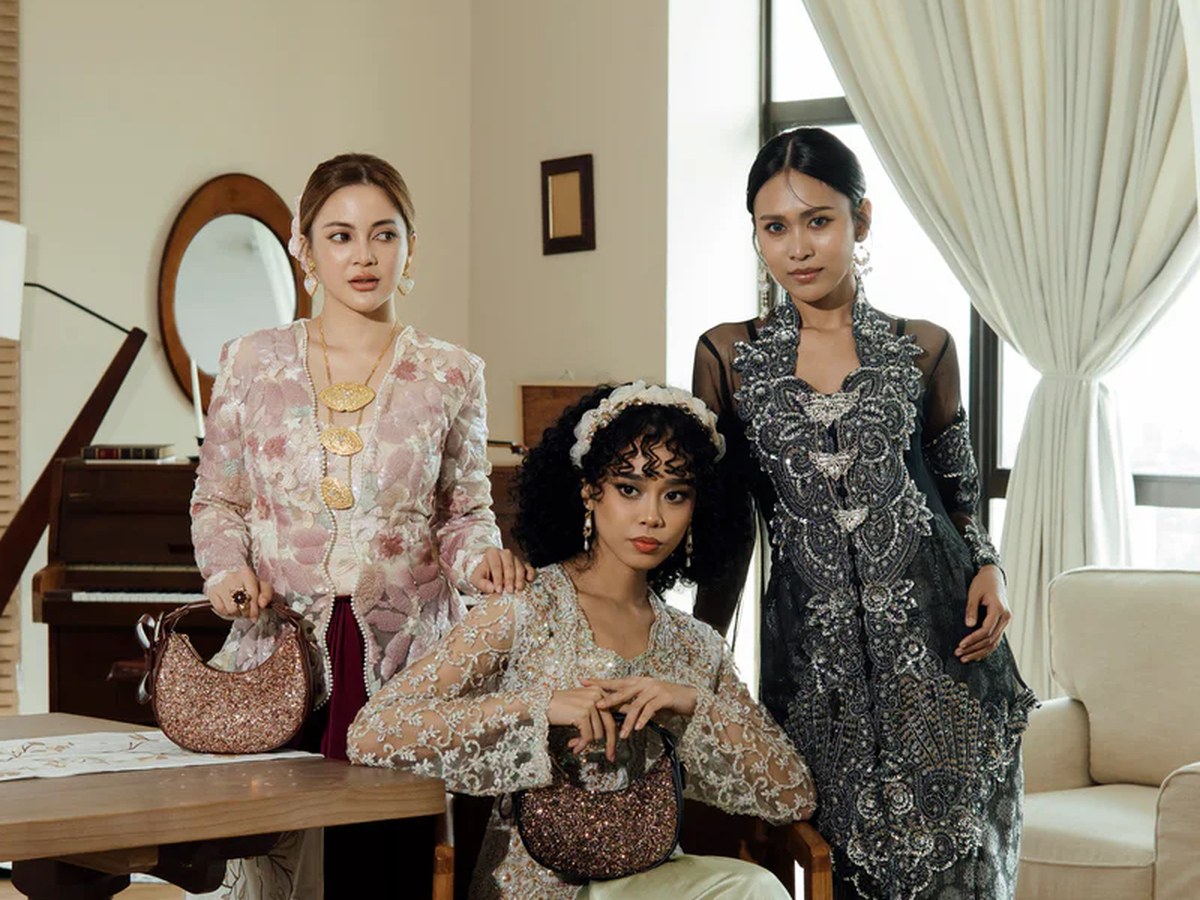
The current creative direction under Christine is more deliberate than the founders' era. The Raya 2026 collection, which launched earlier this year, shows the shift clearly. The campaign imagery is editorial, not catalogue. The styling pairs the bags with traditional kebaya and modern silhouettes simultaneously. The colour palette runs from cream and rose-gold to deep charcoal embroidery. The product line includes pieces like the Blossom Mini, intentionally sized for the festive market, with beadwork that aligns with the kebaya pieces in the campaign.
This is a brand that knows its customer. The Malaysian woman buying a Raya bag is not buying it to wear once. She is buying it because she expects to wear it through the next decade of family gatherings, work events, weddings, and milestones. The bag has to look festive enough for the first wear and quiet enough for the hundredth. F.timber has been answering that brief for thirty years. The second generation is answering it with more visual sophistication, but the brief has not changed.
The international expansion is the next chapter. F.timber currently ships to Singapore, Indonesia, and Hong Kong. Christine has signalled an ambition to participate in regional exhibitions across Asia and to position F.timber as one of Asia's top handbag brands. The brand has spent thirty years building the Malaysian foundation. The question is whether the Malaysian foundation translates into Indonesian, Hong Kong, and Singaporean markets without losing what made it work in Malaysia first.
There is a structural advantage F.timber holds going into this expansion that most new Malaysian brands do not. The thirty years of operational discipline. The manufacturing relationships. The understanding of what a Malaysian woman will pay for a handbag and what she will not. The accumulated customer data, even where it lives in informal form rather than CRM systems. None of this can be replicated by a competitor with capital. It can only be built one Raya at a time, one product cycle at a time, one customer who keeps coming back at a time.
The risks are real. The middle-market handbag category is more crowded than it has ever been. The new generation of Malaysian bag brands, brïk, Nazifi Nasri, Saoi, Nobat, and others, has fragmented the customer attention pool. The Bonia model of borrowed European positioning still dominates the luxury end. The mass-market end is owned by international fast fashion. F.timber sits in the middle, with a thirty-year history that customers under thirty may not know about and an aesthetic that has to keep evolving without alienating the customers who have been loyal for two decades.
The second generation question Christine has answered, and which most family businesses get wrong, is what to update and what to leave alone. She updated the channel mix. She updated the visual language. She updated the cadence and tone of the customer relationship. She did not update the product philosophy. She did not abandon the materials. She did not chase a higher price point that would have alienated the customer base.
The result is a brand that reads as modern without reading as new. That is the position most Malaysian heritage brands cannot get to. Bonia reads as established but stylistically frozen. The newer brands read as fresh but unproven. F.timber reads as both established and current, because the second generation kept the foundation and modernised the surface.
The positioning the brand is moving toward in 2026 carries a line worth quoting. Malaysian carry, made to last. The Malaysian handbag carried through three generations of becoming. The line is aspirational but it maps directly to what the brand has actually done. First generation built the operational base. Second generation modernised the brand surface. Third generation, eventually, will inherit a Malaysian brand that has lived through three decades of Malaysian fashion and emerged with its foundation intact.
Most Malaysian businesses will not survive a generational handover. The ones that do are not the ones that pretended nothing was changing. They are the ones that knew exactly which things had to change and which things could not. F.timber, three decades in, is the working example.