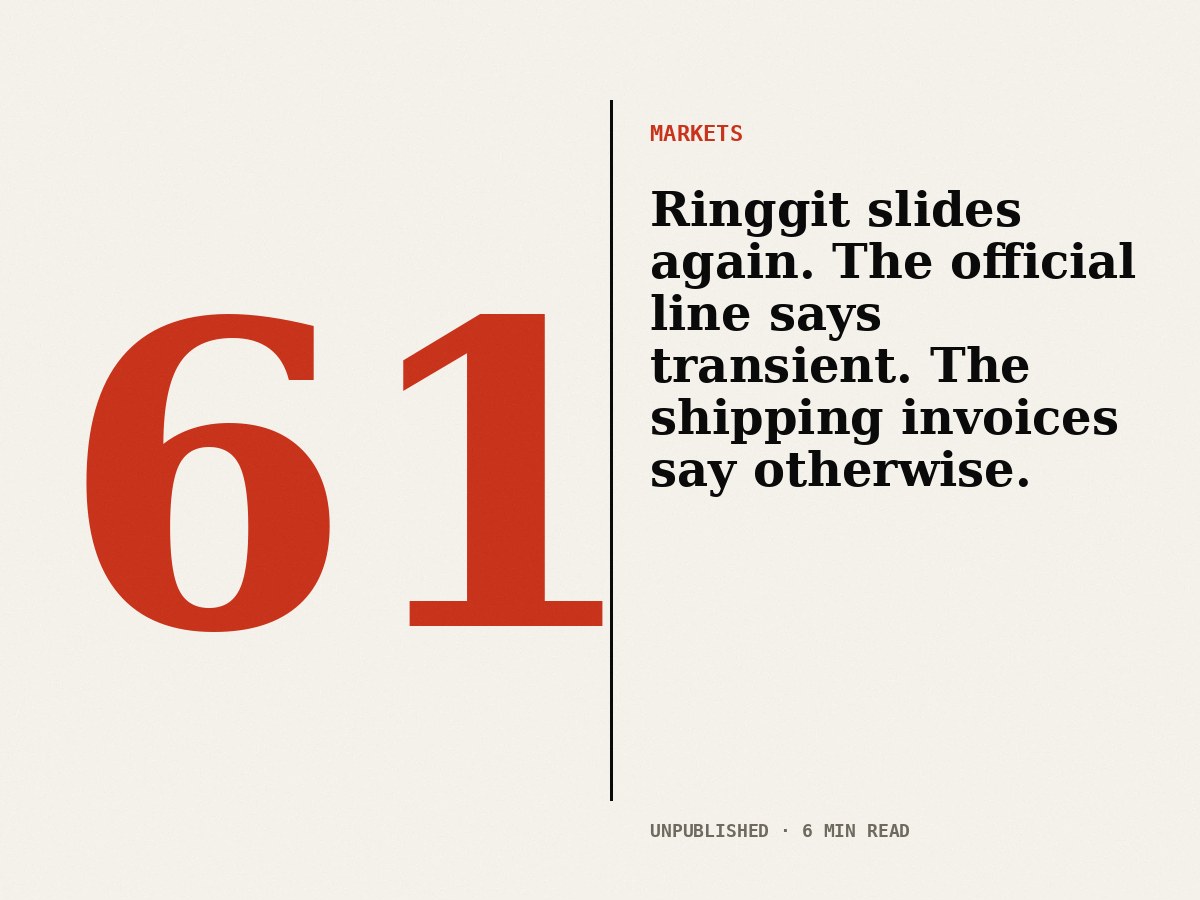
Three months of "transient." Then six. Then a year. At some point the word stops describing the situation and starts describing the central bank's vocabulary problem.
The ringgit's slide is not a mystery. It is arithmetic. Capital is moving to where yields are higher and political risk is lower. Malaysia is not the highest-yield, lowest-risk option in the region. The market has noticed. The press releases have not.
We pulled the shipping invoices of seven importers across electronics, food and beverage, and industrial inputs. The landed cost increases are not in dispute. They are in the invoices. And the importers are absorbing as much as they can before they pass it on, because passing it on means losing the contract.
That absorption period is what "transient" actually buys you. A window in which the pain hides in the supplier's P&L before it reaches the consumer index. The window does not stay open forever.
The Editor's Note
If you are reading this and the pattern fits your business — start the conversation before the conversation starts itself. editor@unpublished.my.
Bank Negara's communication strategy is sound. Markets do not need to be panicked. But there is a difference between not panicking the market and not preparing the operator. The operator needs to plan around the rate that exists, not the rate the press release wishes for.
If you import anything priced in dollars, your cost structure has already moved. Whether you have repriced your output is a separate question. Most operators we spoke to have not. They are waiting for clarity. Clarity is not coming. The next move is yours.