Chinese cross-border e-commerce has spent fifteen years building a playbook. Source from Shenzhen. List on Amazon. Optimise the listings using bigger teams than the Western competitors can afford. Compete on price, on operational throughput, and on the asymmetric ability to ship in volume from the world's largest manufacturing base.
That playbook is breaking. Not because the manufacturing advantage disappeared. Because the operational layer that built the moat on top of the manufacturing is being commoditised by AI faster than anyone expected.
The evidence is in two places at once. Many Chinese sellers are leaving Europe and the US, the markets they have dominated for the last decade. Many of them are landing in Russia and the broader CIS region, a market that until recently was considered unviable for cross-border e-commerce. The reasons for both halves of the move are the same.
The first half. Europe and the US have become harder. Tariffs on small parcels are tightening. Platform rules are getting stricter. Traffic is becoming more expensive. Margins are compressing across the board. The competitive set is now Chinese sellers fighting each other for the same Western consumers, in markets where the absolute demand has stopped growing.
The second half. The Russian-speaking market is in early-stage e-commerce growth. Russia's e-commerce market reached RUB 14 trillion, approximately USD 189.5 billion, in 2025, with projections to grow to RUB 30 trillion by 2029. E-commerce penetration sits at only 23%, well below mature markets like China or South Korea. Together with Belarus, the five Central Asian countries, and other CIS states, the broader population is around 250 million, roughly comparable to Indonesia. The market is still expanding, the supply chain advantage of Chinese manufacturing still applies, and the competitive density is lower.
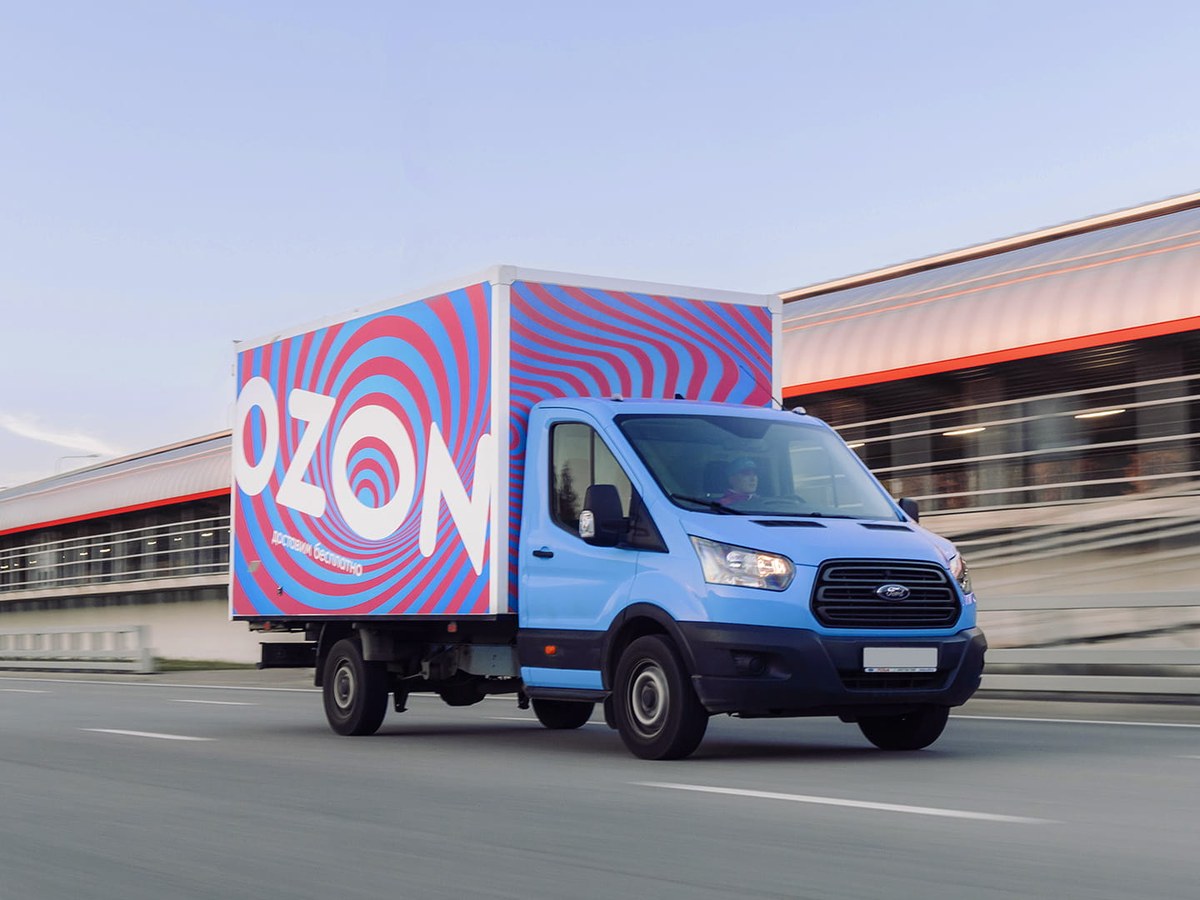
Ozon, often called the Amazon of Russia, has built the infrastructure for Chinese sellers to land there. Over five million square metres of warehouse space. More than 20,000 full-time drivers and transport vehicles. A network of more than 84,000 pickup points covering over 90% of Russian users. Now more than 750,000 active sellers on the platform, with Chinese sellers accounting for over 20% of that base.
Simon Huang, president of Ozon for Greater China, said something in a recent interview that is more important than the geographic shift itself. The advantage Chinese sellers had in the past was information asymmetry and operational efficiency. With AI, both of those advantages are weakening fast.
Read that sentence again. The two things that built the Chinese cross-border empire are the two things AI is dissolving.
Information asymmetry was the value of knowing things the competition did not. Which products were trending. Which keywords were undervalued. Which suppliers had capacity. Which platforms had loopholes. The experienced operator commanded a premium because they had access to information the new entrant did not. AI now ingests global public data at low cost and surfaces trends and demand signals at a speed and scale that the experienced operator cannot match. The asymmetry is gone.
Operational efficiency was the value of running large teams of inexpensive labour through repetitive tasks. Listing optimisation. Translation. Customer service in less common languages. Ad bid management. Customer review monitoring. Image generation. The Chinese seller with a team of forty operations staff in Shenzhen had a real cost advantage over the American seller working alone. AI now performs those tasks at a fraction of the cost, around the clock, with no holidays and no shift changes. The efficiency advantage is gone.
What is left, according to Huang, is the OPC. The one-person company. A solo operator equipped with the right AI tools can now compete operationally against teams of forty. Many of those teams will dissolve. Many of those operators will leave to start their own businesses. The threshold for starting a cross-border business is falling.
The Editor's Note
If you are reading this and the pattern fits your business — start the conversation before the conversation starts itself. editor@unpublished.my.
But the threshold for differentiating in a cross-border business is rising at exactly the same time. If everyone has the same operational capability, the operational layer becomes worthless as a moat. What rises in value is the layer underneath operations and the layer above operations. Underneath operations is supply chain quality, factory relationships, raw material sourcing. Above operations is brand, IP, design, content aesthetics, user trust.
Both of those layers are harder to replicate. AI cannot quickly generate the trust a consumer has built up with a brand they have bought from for two years. AI cannot generate genuine cultural understanding of a market. AI cannot register a trademark, build a community, or accumulate the soft inputs that make a brand defensible.
Now bring this back to Malaysia, because the lesson is not really about Russia or about Chinese e-commerce.
Malaysian operators in cross-border or domestic e-commerce sit in roughly the same position the Chinese sellers in Western markets sat in eighteen months ago. The operational advantage they have built, lower customer acquisition costs, better local market knowledge, customer service in regional languages, is the exact advantage AI is currently in the process of erasing. The Malaysian operator running a team of twelve to handle Shopee and Lazada listings is going to find, sometime in the next eighteen to twenty-four months, that a single founder using AI tools can do most of what that team is doing. The team will become economically indefensible. The founder will either restructure or be restructured by competitors who already have.
The defensible Malaysian operators of 2028 are the ones building the brand, IP, design, and trust layers right now, before the operational layer becomes commoditised. Not as a marketing exercise. As a strategic exercise. The question to ask is what about your business cannot be replicated by a competitor with AI tools and twelve months. If the answer is operational throughput, the answer is wrong.
If the answer is a brand that a customer trusts enough to pay premium for, that is defensible. If the answer is an IP portfolio of distinctive designs and trademarks, that is defensible. If the answer is a manufacturing relationship that competitors cannot replicate, that is defensible. If the answer is a community of customers who follow the founder rather than the product, that is defensible.
If the answer is anything that AI can automate at a tenth of the cost in eighteen months, that is not a moat. That is a temporary advantage and the clock has started.
Chinese sellers moving into Russia is the symptom. The thing that caused them to move is the same thing that will eventually cause Malaysian operators to face the same question. Build a brand layer that AI cannot dissolve, or accept that the operational efficiency that fed the business so far is becoming a commodity in real time. Both choices have consequences. Only one of them keeps the business defensible.
Short-termism is becoming harder, Huang said. He was talking about Chinese sellers. The sentence travels.